Groupage, part load or full truck?
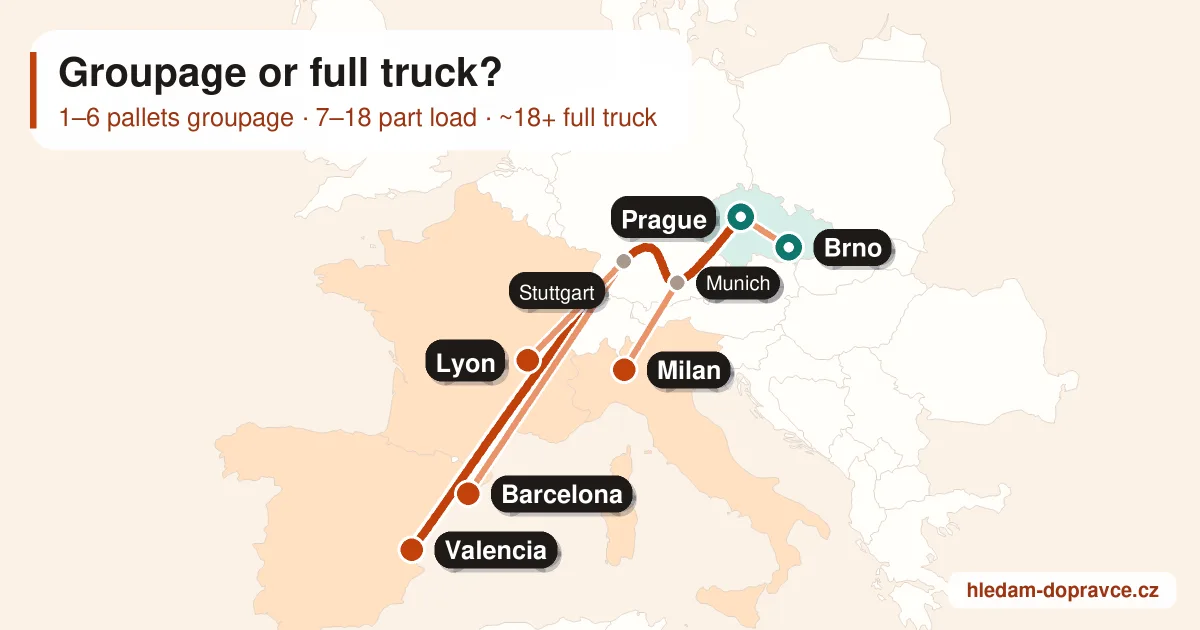
For 1–6 pallets groupage is usually the most economical, for 7–18 pallets a part load or rigid truck, and from around 18 pallets or 7 tonnes a full truck with a 13.6 m trailer. The thresholds are not fixed – weight, pallet height, stackability and how quickly you need the goods all play a part. Groupage is cheapest per pallet, but it is slower and the goods are handled at depots along the way.
How do the three options differ?
| Criterion | Groupage | Part load | Full truck |
|---|---|---|---|
| Typical quantity | 1–6 pallets | 7–18 pallets | from ~18 pallets or 7 t |
| How the goods travel | collection to depot, trunk route, local delivery | on a truck with other consignments, no depot | alone, straight from supplier to you |
| Transhipment | yes, usually more than once | normally not | no |
| Transit time | longest | slightly longer than full truck | shortest |
| Price | lowest overall, highest per pallet | by space used and weight | for the whole vehicle, however full |
| Date reliability | indicative | good | best |
When groupage makes sense
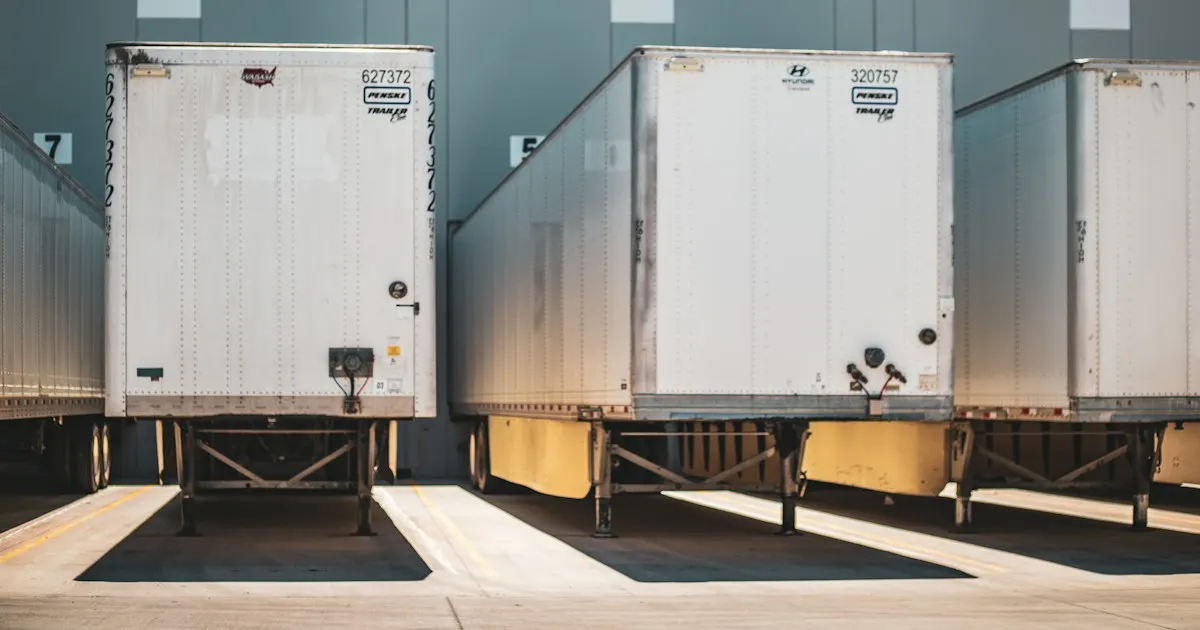
Groupage suits single pallets, samples and small repeat orders. A vehicle collects from several shippers, consignments are sorted at a depot and then travel on a scheduled trunk service. You pay only for the space your pallets take up.
- Pro: the lowest total cost for small quantities.
- Pro: regular departures – no waiting for a truck to “fill up”.
- Con: longer transit – from Spain typically 5–7 working days, from France and Italy 3–5.
- Con: transhipment raises the risk of damage, so goods must be well packed and secured.
When a part load makes sense
A part load takes up part of a vehicle that runs more or less directly. The goods are loaded at your supplier and unloaded at your premises; the truck simply stops for other customers on the way. It works well for 7–18 pallets, or for goods that would not cope with depot handling.
- Pro: faster and gentler than groupage.
- Pro: the price reflects the loading metres you use.
- Con: the timing also depends on the other consignments on board.
When a full truck makes sense
An articulated truck with a 13.6 m curtainsider trailer takes 33 Euro pallets and roughly 24 tonnes. It pays off from about 18 pallets or 7 tonnes, and earlier for bulky goods that can’t be stacked. Around that point a part-load price gets close to the cost of the whole vehicle, and a direct run is quicker.
- Pro: the shortest transit and most precise timing, with no transhipment.
- Pro: the truck runs only for you, so loading and unloading can be tailored.
- Con: you pay for the whole vehicle even if you don’t fill it.
Checklist: how to decide
- Work out the loading metres: a 120 × 80 cm Euro pallet takes 0.4 LDM, a 120 × 100 cm industrial pallet 0.5 LDM.
- Find out the total weight – heavy goods may need a bigger vehicle even if they take little space.
- Check whether the pallets can be stacked. Two pallets stacked on top of each other take up the floor space of one.
- Think about fragility: glass, ceramics or irregular items cope less well with depot handling.
- Decide how firm the date is. If you need the goods by a specific day, groupage may not be enough.
- Check the unloading options – without a dock and forklift you need a vehicle with a tail lift, which tends to be smaller.
What to ask the carrier
- Will the goods be transhipped, and how many times?
- How many days are realistic on this route, and from which day are they counted?
- Do you price by pallet, loading metre or weight?
- What happens if the supplier loads more pallets than were quoted?
We describe the vehicles used for each option in truck and trailer types. If you are unsure, choose “Not sure” in the calculator and we will suggest the right service.